
Jungermannia polaris
| Common Name | Arctic Flapwort |
| Quick & Dirty ID | XXXXXX |
Image Gallery
Distinguishing Features
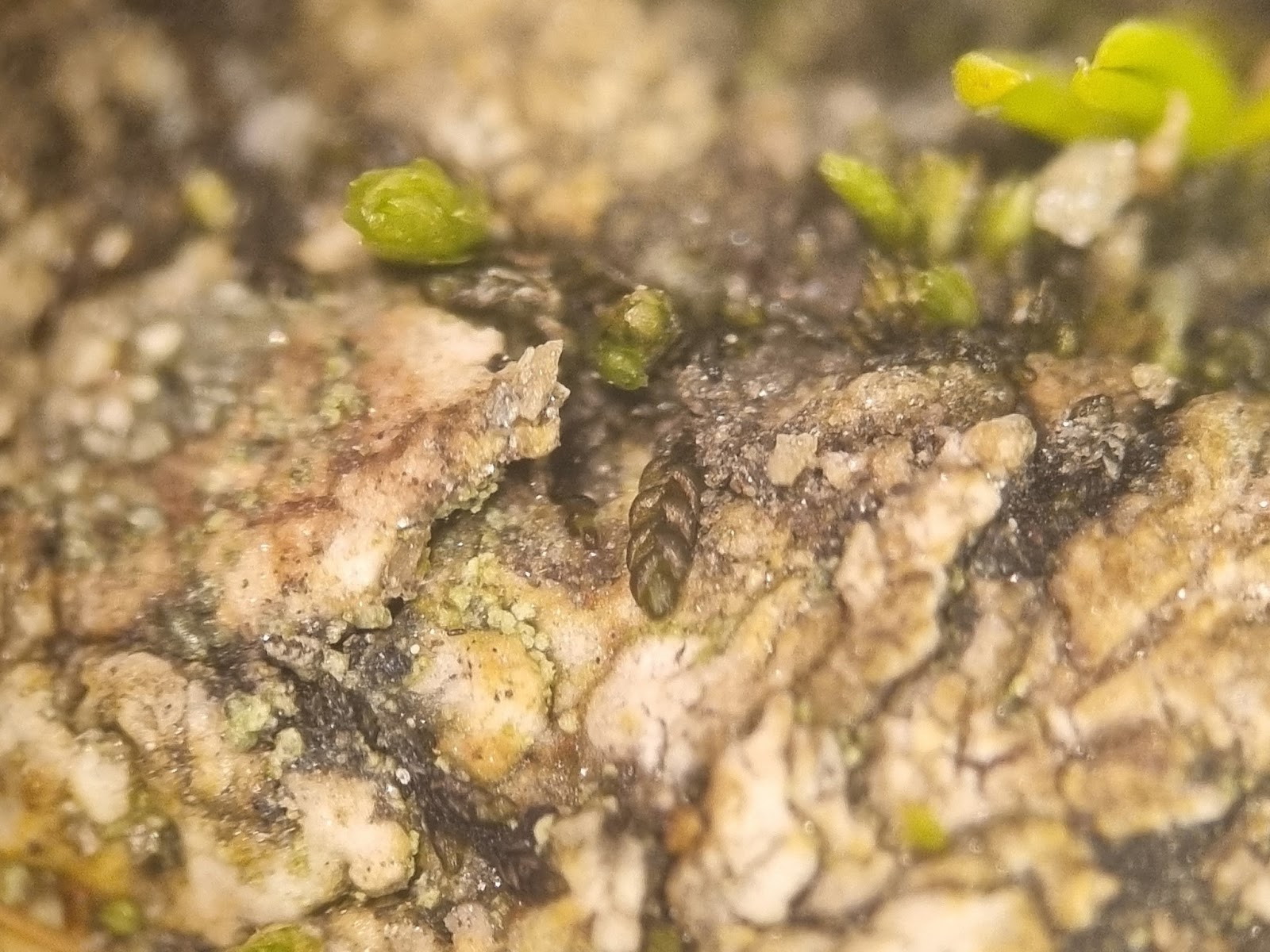
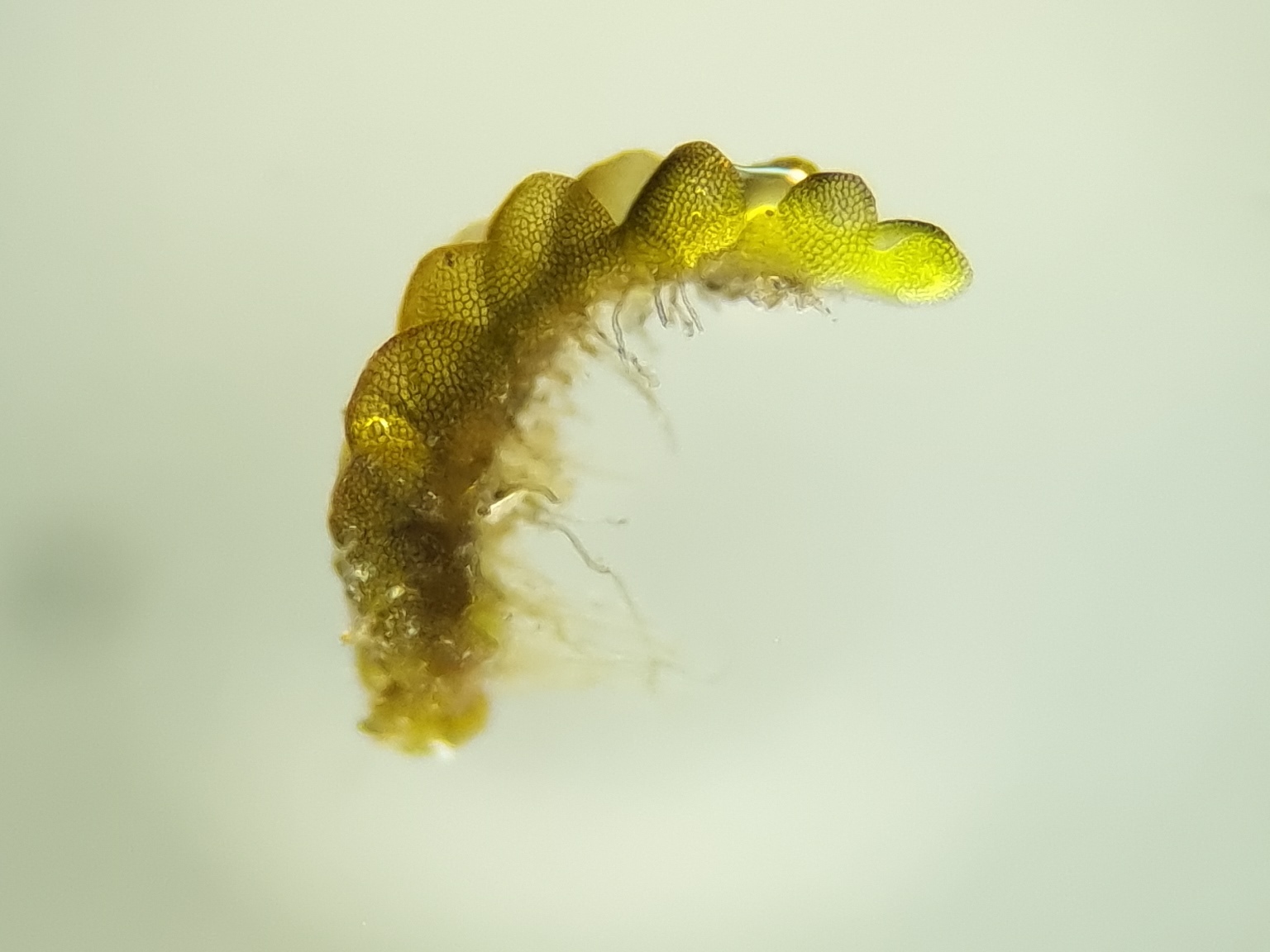
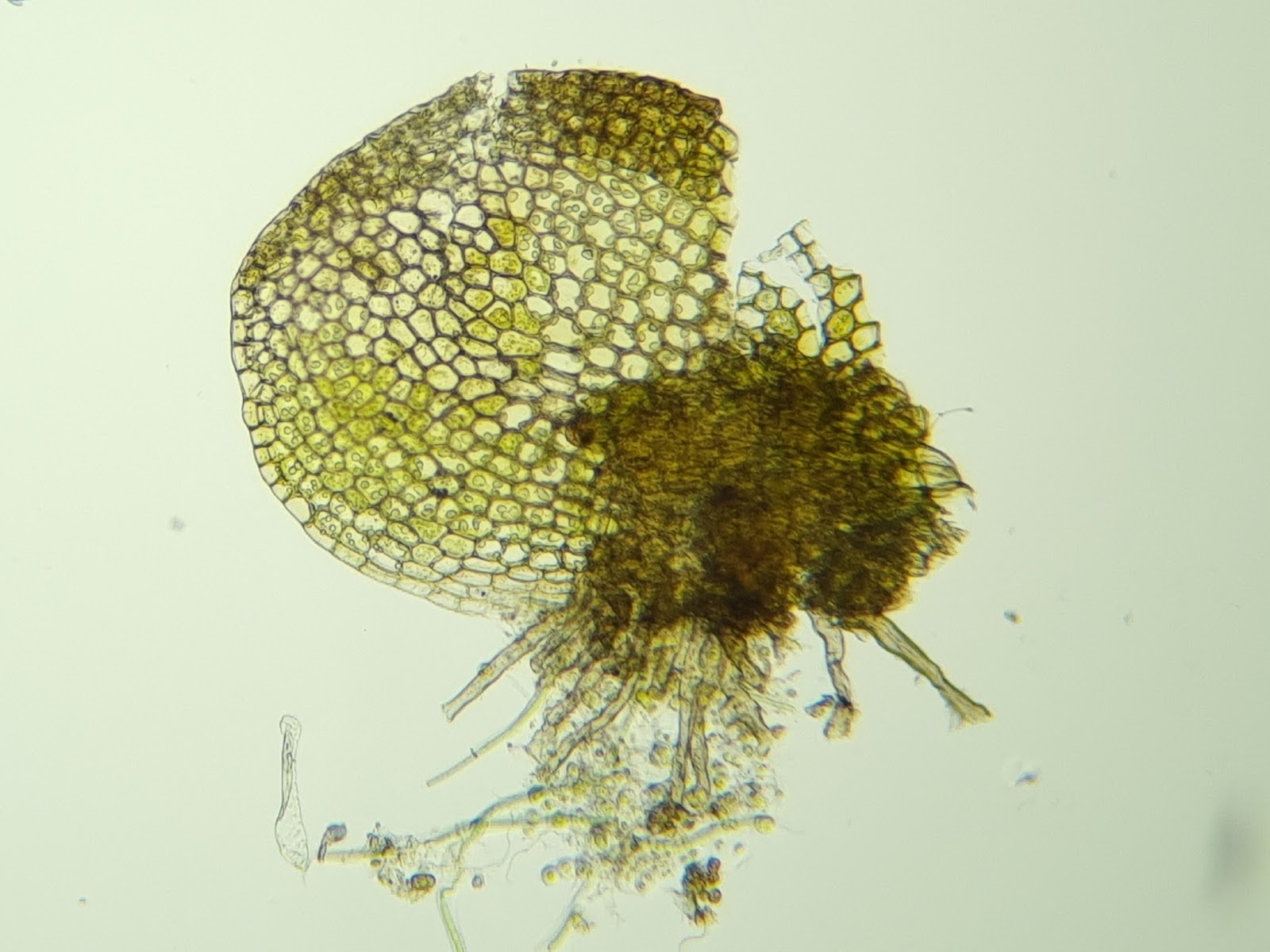
A dark blackish unlobed leafy liverwort, the rarely noticed Jungermannia polaris has leafy shoots less than 1 mm wide and is restricted to rocks in late-snow drainage areas of polar or tundra-like habitats. Close inspection shows circular leaves, brownish rhizoids and no underleaf. The plants are typically fertile and have antheridia and archegonia on the same plants, albeit in different regions (“paroicous”).
Similar species
Jungermannia polaris could be mistaken for the far more common J. pumila, which tends to occur on river and creek rocks in less extreme habitats. That species has green-brown hues and stems that are only about 20% of the leafy shoot width, while the black J. polaris has stems that are roughly 1/3rd the width of the leafy shoots. Jungermannia borealis might be found in the same habitat, but that species has antheridia and archegonia on separate plants (“diocous”) and leaves that are longer than wide.
Habitat
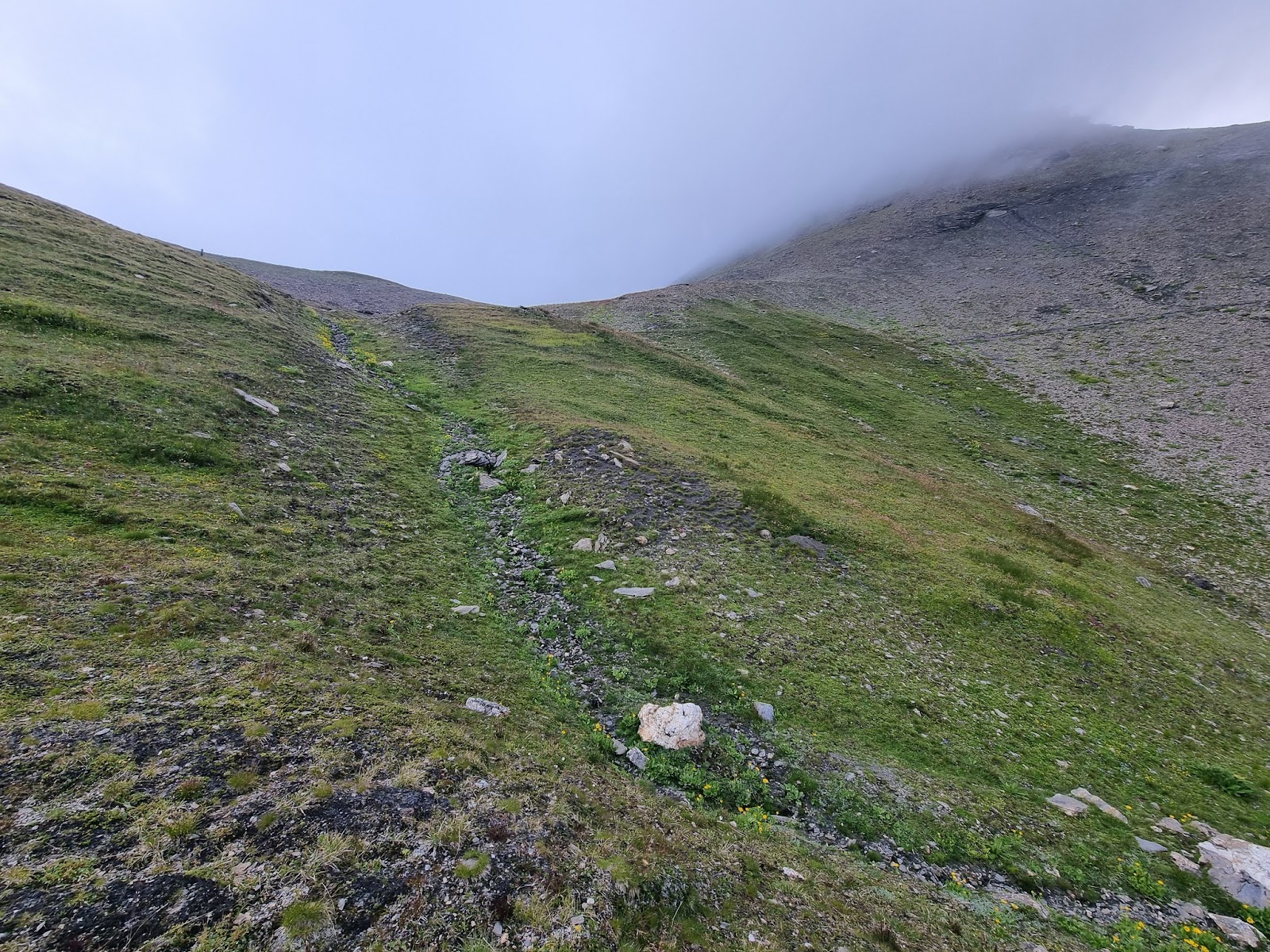
Moist rock outcrops, cliffs, ledges, crevices, boulders, streambanks, and snowbed sites in the subalpine and alpine zones
Associated species
XXXXXX
Distribution Map
Relevant Literature
- Godfrey, J.D. (1977). Hepaticae and Anthocerotae of southwestern British Columbia . [Doctoral dissertation, University of British Columbia]. UBC cIRcle.
- Hong, W. S. (2007). Scapania. In Flora of North America Editorial Committee (Eds.), Flora of North America North of Mexico (Vol. 3) . Oxford University Press.
- Wagner, D. H. (2013). Guide to the liverworts of Oregon: Scapania undulata . Oregon State University Herbarium.